
How Much Does TMS Therapy Cost?
Dr. Zubairi
In this Article
If you or a loved one is exploring TMS therapy for depression or another mental health condition, one of the first questions is: how much does TMS therapy cost? The answer depends on several factors including your location, insurance coverage, and the number of sessions required.
In this guide, we break down TMS therapy cost in the USA, whether insurance covers TMS, how many sessions are typically needed, and how to decide if TMS is the right investment for your mental health.
Quick Answer: A full TMS therapy course typically costs between $6,000 and $12,000 without insurance. With insurance, out-of-pocket costs can drop significantly, sometimes to $0.
What Is TMS Therapy?
Transcranial Magnetic Stimulation (TMS) is an FDA-cleared, non-invasive treatment that uses magnetic pulses to stimulate areas of the brain associated with mood regulation.
Unlike medications, TMS does not require anesthesia or sedation. Patients remain awake during treatment and can usually return to normal daily activities immediately afterward.
TMS therapy is especially helpful for patients who have not experienced sufficient improvement from antidepressant medications or who struggle with medication side effects.
How TMS Works – Step by Step
- A trained technician places a magnetic coil against your scalp.
- The coil delivers painless magnetic pulses targeting the prefrontal cortex.
- These pulses stimulate nerve cells that regulate mood.
- Sessions are repeated daily over several weeks for cumulative benefit.
How Much Does TMS Therapy Cost in the USA?
The average TMS therapy cost in the USA depends on several factors, including the clinic, location, treatment protocol, and insurance coverage.
Average TMS Therapy Pricing
Treatment Type | Average Cost |
Single TMS Session | $200–$500 |
Full Treatment Course | $6,000–$15,000 |
With Insurance Coverage | Reduced out-of-pocket cost |
A full course of TMS therapy usually includes 30–36 sessions over several weeks.
Factors That Affect TMS Therapy Cost
- Type of TMS: Deep TMS (dTMS) and accelerated TMS (iTBS protocol) may cost more than standard repetitive TMS (rTMS)
- Geographic location: Urban clinics typically charge more than rural practices
- Clinic type: Hospital-affiliated centers often charge more than independent outpatient clinics
- Number of sessions: Most courses include 20–36 sessions
- Insurance coverage: The biggest variable in total out-of-pocket cost
Is TMS Therapy Covered by Insurance?
Yes, many insurance providers now cover TMS therapy for depression when certain medical criteria are met.
Insurance coverage has expanded significantly in recent years because TMS therapy is FDA-cleared and supported by clinical research.
Common Insurance Requirements for TMS Therapy
Insurance providers may require:
- A diagnosis of major depressive disorder
- Previous antidepressant medication trials
- Documentation showing medications were ineffective or caused side effects
- Prior authorization from your psychiatrist or provider
How Many TMS Sessions Are Needed?
Most patients require a full treatment course of approximately 30 to 36 TMS sessions.
Typical TMS Treatment Schedule
A standard schedule usually includes:
- Initial consultation and evaluation
- Brain mapping appointment
- Daily treatment sessions
- Follow-up assessments
Most patients attend treatment:
- 5 days per week
- For 6–8 weeks
Some individuals may benefit from maintenance sessions after completing the initial course, depending on symptom improvement and long-term treatment goals.
How Long Does Each TMS Session Take?
Each standard TMS session lasts approximately 20 to 40 minutes.
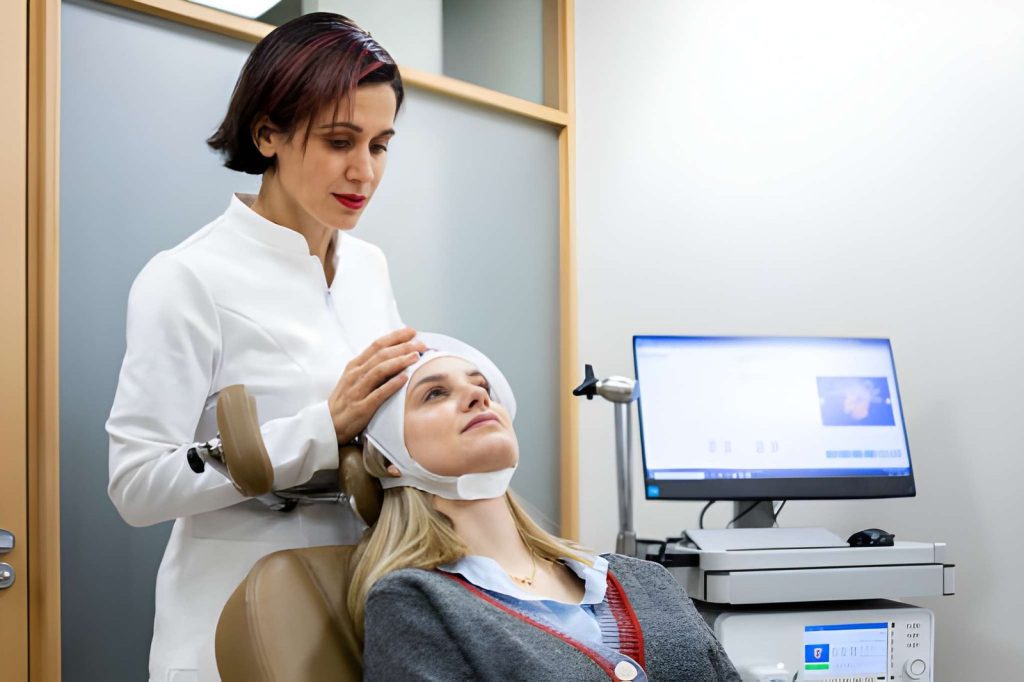
What to Expect During a TMS Session
- You remain awake and seated in a reclining chair.
- The magnetic coil is positioned against your head.
- You will hear clicking sounds and feel a gentle tapping on your scalp.
- No sedation or anesthesia is required.
- You can return to normal activities immediately after each session.
TMS is performed on an outpatient basis, making it compatible with a regular work or school schedule for most patients.
What Conditions Can TMS Treat?
Although TMS therapy is most commonly associated with depression treatment, it may also help with several other mental health conditions.
Conditions Commonly Treated With TMS
- Major depressive disorder
- Treatment-resistant depression
- Anxiety symptoms
- Obsessive-compulsive disorder (OCD)
Your psychiatrist can determine whether TMS therapy may be appropriate for your specific condition and symptoms.
Is TMS Worth It?
Whether TMS therapy is worth the cost depends on your individual circumstances. Here is how to evaluate it:
TMS May Be Worth It If:
- You have tried 2 or more antidepressants without adequate results
- You experience significant medication side effects
- Your depression is significantly affecting your quality of life and functioning
- Your insurance covers TMS, reducing out-of-pocket costs
- You prefer a non-medication approach to treatment
Considerations Before Deciding
- TMS requires a significant time commitment (daily sessions for 4–6 weeks)
- Results are not guaranteed; response rates are 50–60%
- TMS is not suitable for patients with certain metal implants in or near the head
- Some patients experience mild scalp discomfort or headaches during treatment
For many patients, particularly those who have exhausted other options, TMS represents a meaningful opportunity for relief. Working with a mental health professional to evaluate your specific profile is the best starting point.
Frequently Asked Questions (FAQs)
How much does TMS therapy cost without insurance?
Without insurance, a full TMS course typically costs between $6,000 and $12,000 in the USA, depending on the number of sessions and the provider.
How long does TMS therapy last?
A standard TMS course lasts 4 to 6 weeks with daily sessions. The antidepressant effects can last 6 months to over a year for many patients. Maintenance sessions may be recommended.
Is TMS therapy painful?
TMS is generally not painful. Most patients feel a tapping or knocking sensation on the scalp during sessions. Some experience mild headaches or scalp discomfort, which typically subside after the first few sessions.
How soon can you see results from TMS?
Some patients notice improvements within a few weeks, while others may require the full treatment course before experiencing significant symptom relief.
Releated Articles
How Much Does TMS Therapy Cost?
How Much Does TMS Therapy Cost? BY Dr. Zubairi In this Article If you or a loved one is exploring…