
TMS · Transcranial Magnetic Stimulation
Non-invasive depression treatment. No medication. No sedation.
FDA-cleared for major depressive disorder that hasn't responded to antidepressants. Drive yourself home after every session. Most commercial insurers cover the full course.
Coverage details confirmed during your screening call.
From inquiry to your first appointment in 2–3 days.
Inquire
Submit a request below or call (734) 206-2888.
Screening Call
A clinician calls you within 24 business hours to confirm fit.
First Appointment
See Dr. Zubairi within 2–3 days of your inquiry.
Clinical evidence
What the research shows.
Response rate
Patients with treatment-resistant depression showing meaningful symptom improvement after a full TMS course in real-world clinical data.
37%
Remission rate
Patients achieving full remission of depressive symptoms after a 36-session TMS course in pivotal NeuroStar trials.
90%
Insurance coverage
Of major commercial insurers cover TMS for major depressive disorder after documented antidepressant failures.
Source: NeuroStar real-world data and FDA pivotal trials. Individual results vary.
TMS may be a fit or it may not.
TMS may be a fit if you
- — Are an adult (18+) with major depressive disorder
- — Have tried at least 1–2 antidepressants without adequate response
- — Want a non-medication treatment option
- — Can commit to 36 sessions over 6–9 weeks (5 days/week initially)
- — Want to drive yourself home no sedation involved
- — Prefer no systemic side effects (weight, sexual, GI)
TMS is not appropriate if you
- — Have non-removable metallic implants in your head (excluding standard dental)
- — Have a cochlear implant or other neural stimulator
- — Have a history of seizures or epilepsy
- — Have an aneurysm clip or other intracranial metal
- — Are currently in active mania or psychosis
- — Are pregnant (data is limited; we discuss case-by-case)
What to expect
What a TMS session actually feels like.
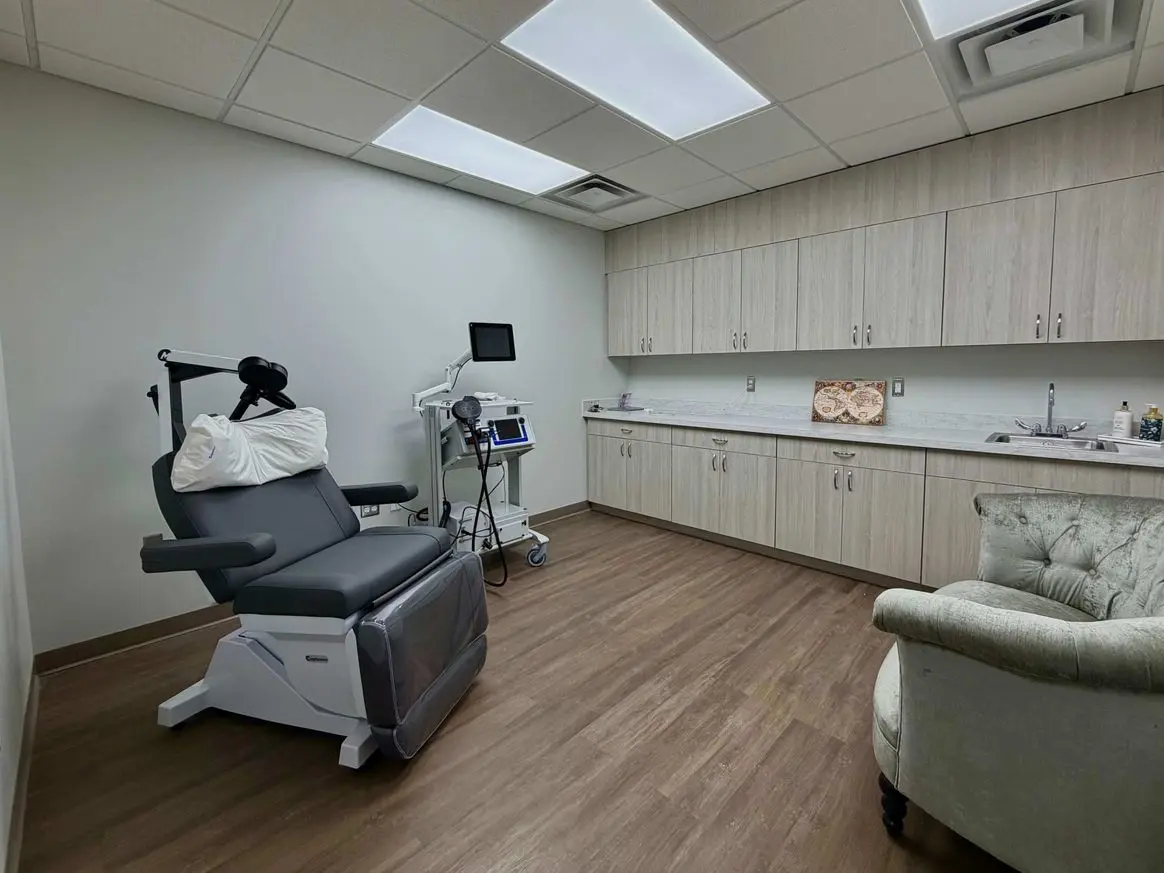
No anesthesia. No fasting. No prep. You sit in a chair, watch something on your phone, and leave 20 minutes later.
Motor threshold mapping
Your first visit only we map your individual treatment dose by finding the magnetic intensity that produces a small thumb twitch. Calibrates the rest of your course.
Sit in the chair, headrest in place
You're fully awake. No IVs, no medication, no drowsiness. You can scroll your phone, listen to a podcast, or close your eyes.
Magnetic pulses to the prefrontal cortex
You'll feel a tapping sensation on the side of your head like a finger flicking. Some patients find it briefly uncomfortable; most find it neutral. We can adjust intensity.
Stand up. Drive home. Resume your day.
No recovery period. No restrictions. Most patients go straight back to work or pick up the kids. The whole visit, including walk-in to walk-out, is ~30 minutes.
The full TMS course, week by week.
Weeks 1-6 · Acute Phase
Weeks 7-9 · Taper
Beyond · Maintenance (if needed)
Fast-Track TMS
Request a Fast-Track TMS consultation.
Submit your details below. A clinician will call you within 24 business hours to confirm fit. If TMS is appropriate, you'll see Dr. Zubairi within 2–3 days.
What happens next: A clinician not an admin will call you to understand what you're looking for, review your treatment history, and confirm TMS is the right next step.
We accept most major insurance plans.
Coverage details confirmed during your screening call.
Request a callback
Tell us a bit about you and we’ll call back within 24 business hours.
TMS or SPRAVATO?
Two interventional options. Which is right for you?
Common questions
TMS FAQs.
Most patients describe it as a tapping sensation on the side of the head. Some find it briefly uncomfortable in the first 1–2 sessions, then it becomes routine. We can adjust intensity if needed. There's no pain medication or anesthesia involved.
No. Unlike ECT, TMS has no cognitive side effects. Many patients actually report improved focus and memory once their depression lifts. The pulses target a small region of the prefrontal cortex with high precision.
Yes. Most patients schedule sessions before work, during lunch, or at the end of the day. There's no recovery time. The biggest commitment is the 5-days-a-week scheduling for the first 6 weeks — but each individual visit is short.
If prior auth is denied, we appeal most denials are overturned with proper clinical documentation. If the appeal is denied as well, we discuss self-pay options including financing through CareCredit or installment plans. We'll never start treatment without you understanding the cost.
ECT (electroconvulsive therapy) requires general anesthesia, induces a seizure, and has cognitive side effects. TMS is fully awake, induces no seizure, and has no cognitive side effects. ECT is more effective for severe depression with psychotic features; TMS is better tolerated and easier to integrate into daily life.
If we don't see meaningful response by week 4 (measured on PHQ-9), we discuss alternatives extending the course, switching to SPRAVATO, or revisiting the medication strategy. About 60% of patients respond; for the others, we have a clear next step.
TMS therapy usually takes about 6–9 weeks, with sessions scheduled 5 days per week. Treatment length may vary depending on individual response.
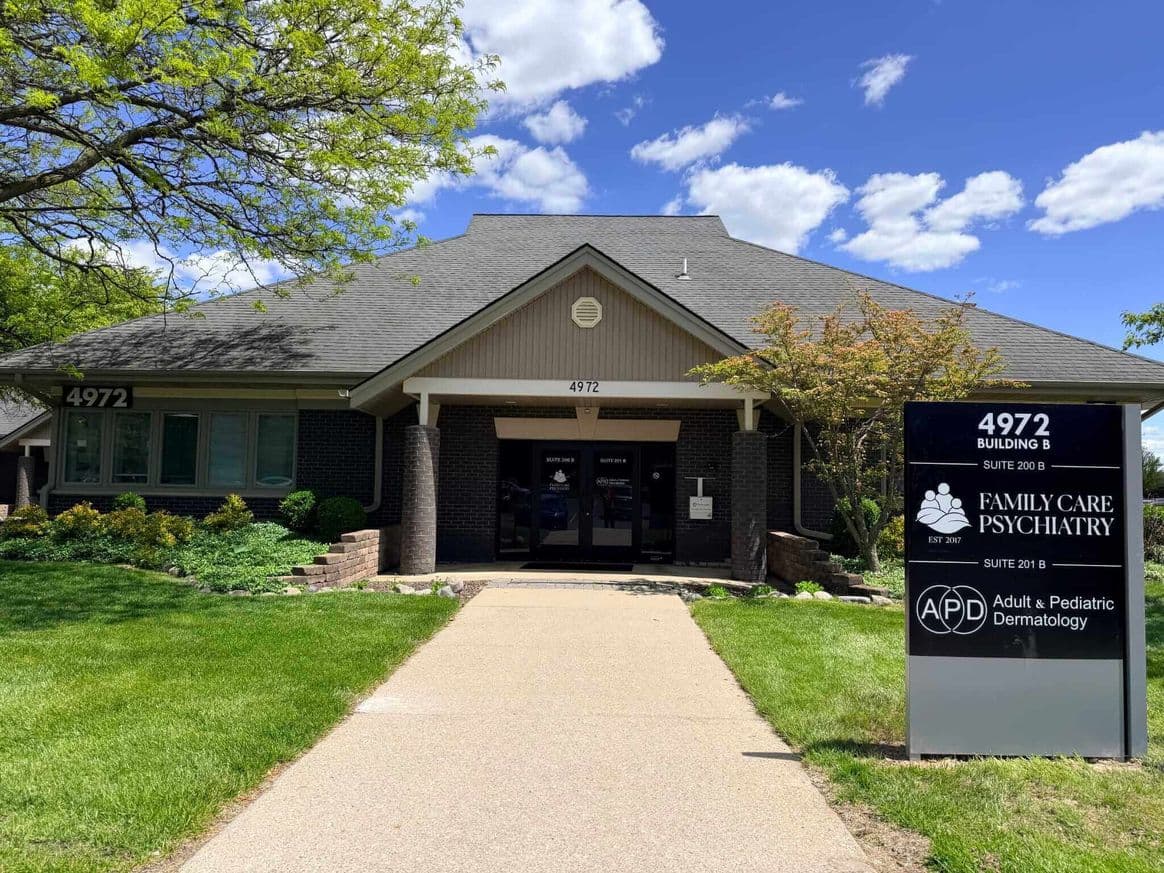
We provide TMS treatment at our Ypsilanti office easily accessible from Ann Arbor, Plymouth, Canton, Brighton, Chelsea MI as well as surrounding areas in Washtenaw, Livingston and Jackson counties.
TMS is FDA-approved and considered very safe. Some patients may experience mild side effects such as headache or scalp discomfort, which usually resolve quickly.
Find out if TMS is right for you.
Submit a request and a clinician will call within 24 business hours. First appointment with Dr. Zubairi in 2–3 days.